As a website or application grows, basic shared hosting may no longer provide the resources, flexibility, or control required to handle increasing traffic and workloads. VPS hosting offers a middle ground between shared hosting and a dedicated server, providing greater control and an isolated hosting environment at a more accessible cost.
VPS hosting is commonly used for business websites, web applications, e-commerce platforms, development environments, APIs, databases, and other workloads that need more resources than typical shared hosting can provide.
What Is VPS Hosting?
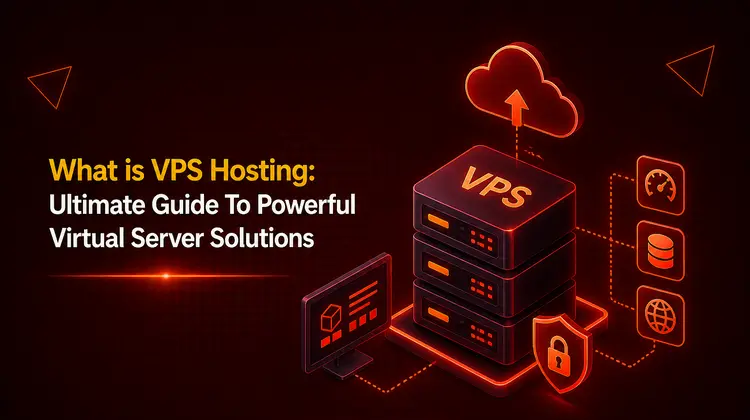
VPS stands for Virtual Private Server. A VPS is a virtualized server environment created on a physical server using virtualization technology.
Although multiple VPS instances can run on the same physical machine, each VPS operates as an independent environment with its own operating system, allocated resources, storage, and configuration.
This gives users considerably more control than traditional shared hosting.
How Does VPS Hosting Work?
A physical server is divided into multiple virtual server environments. Each VPS receives an allocated amount of resources such as CPU, RAM, storage, and network capacity.
Users can typically install software, configure services, create databases, deploy applications, and manage their server according to their requirements.
Common VPS operating systems include Linux distributions such as Ubuntu, Debian, AlmaLinux, and Rocky Linux, as well as Windows Server for applications that require a Windows environment.
Benefits of VPS Hosting
More Control
With VPS hosting, users generally have administrative or root-level access. This allows them to configure the operating system, install required software, manage services, and customize the server environment.
Better Resource Availability
Unlike conventional shared hosting, a VPS has resources allocated to the individual virtual server. This can provide more predictable performance for websites and applications.
Scalability
As your requirements increase, you can often upgrade the VPS to a plan with additional CPU, RAM, storage, or other resources without moving immediately to a physical dedicated server.
Improved Isolation
Each VPS operates within its own virtual environment. This provides greater separation from other VPS instances compared with traditional shared hosting.
Suitable for Applications
VPS hosting is well suited for applications that require specific server configurations, background processes, custom software, databases, APIs, or other services that may not be available on shared hosting.
VPS Hosting vs Shared Hosting
The two solutions are designed for different requirements.
Shared hosting focuses on simplicity and affordability. Multiple websites share the same hosting environment, making it suitable for many smaller websites.
VPS hosting provides a more isolated virtual server with greater control and allocated resources. It is useful for growing websites, applications, developers, and businesses that need more flexibility.
The choice depends on your traffic, application requirements, technical knowledge, budget, and expected growth.
Managed vs Unmanaged VPS
VPS hosting can generally be offered as managed or unmanaged.
With a managed VPS, the hosting provider may assist with tasks such as operating system updates, security configuration, monitoring, backups, and server administration.
With an unmanaged VPS, the customer is responsible for server management. This provides greater flexibility but requires technical knowledge of Linux or Windows server administration, networking, security, and software configuration.
What Can You Host on a VPS?
A VPS can support many different workloads, including:
-
Business websites
-
E-commerce stores
-
Web applications
-
APIs
-
Databases
-
Development and testing environments
-
CRM and ERP applications
-
Content management systems
-
Private application servers
-
Automation services
-
Game servers and other specialized applications
The actual suitability depends on the VPS resources and the software's requirements.
VPS Security
Having more control also means taking greater responsibility for security. A VPS should be properly configured and regularly maintained.
Important security practices include using strong authentication, keeping software updated, configuring a firewall, limiting unnecessary services, monitoring system activity, and maintaining reliable backups.
For applications exposed to the internet, additional security measures such as intrusion monitoring and application-level protection may also be appropriate.
When Should You Upgrade to a VPS?
A VPS may be worth considering when your website or application starts experiencing performance limitations on shared hosting, requires custom software, needs specific server configurations, or requires more control over the hosting environment.
It can also be a useful choice when you want to deploy multiple services on one virtual server and have the technical expertise to manage them.
Conclusion
VPS hosting provides a balance between affordability, performance, flexibility, and control. It offers a more independent environment than shared hosting while avoiding the cost and physical infrastructure requirements of a dedicated server.
For growing websites, developers, startups, and businesses running custom applications, a properly configured VPS can provide the infrastructure needed to support increasing workloads and future expansion.